Mental Fitness: New Techniques to Train Your Brain Like a Muscle
Mental fitness refers to the capacity or ability your brain exhibits to adapt to any challenging situations that occur, to think, to carry out complex tasks, and to be mentally sharp and efficient at all times. The human brain functions like a muscle that becomes better as the body gets accustomed to challenging it or pushing its limits further. The term scientists coined this state in the modern world and called it neuroplasticity, which refers to the brain’s capacity to develop and change itself as it gets accustomed to the situations it encounters.
Today, mental training extends beyond puzzles and playing memory games to the application of our everyday activities to train our minds, our physical activities that contribute to the enhancement of our mental fitness, as well as technology-based methods modern technology presents to better our minds. With the threat of declining intellectual capacity in old age posing a global health concern, people at all ages are looking for methods to keep their minds sharp and mentally fit at all times. The article contains the latest practices advocated by scientists to train your minds like a muscle while combining traditional views and knowledge.
The Science Behind Mental Fitness
What Happens Inside the Brain
Researchers have been seeking to identify new information regarding mental stimulation and its effects on brain structure, as it slows down cognitive aging. Other than neural associations, chemicals are important as well. The strengthening of these chemicals through challenges and learning helps develop cognitive resilience as a means to cope with stress and change.
How The Brain Responds To Training
Scientists now understand that, rather than one specific activity, one needs to engage in a variety of activities that they find interesting to get the requisite level of mental fitness. Scientists found that an integrated approach to activities that involve cognitive and sensory brain use results in much better mental development.
Daily Cognitive Workouts That Really Work!
Practical Brain Exercises
It is important to understand that training one’s brain is not necessarily about putting in lots of hard work but about finding space for activities that intellectually challenge an individual. For example, activities that challenge existing memory or challenge processing speeds include crosswords, cards, or word games. Other activities that challenge an individual simultaneously in different areas include strategy games or puzzles such as chess or Sudoku.
Other than traditional brain teasers, acquiring a new skill, be it an interest, language, or musical instrument, takes brain function into completely uncharted territory. This kind of brain test requires concentration, accommodation, and feedback, which stimulates brain growth. Such exercises not only entertain the brain but also add new neural patterns that enhance the state of mental fitness.
- Word puzzles or logic problems
- New language words to be practiced
- Teaching that skill to somebody else
Research and Effectiveness
Indeed, scientific studies have validated the fact that sheer practice has more significance than infrequent high-intensity exercises. In fact, studies have described how cognitively stimulating activities contribute to brain enhancements in memory, perception, and cognitive skills. There are cognitive training applications such as NeuroNation and NeuroTracker, which adjust according to your level of brain function.
Nevertheless, researchers have also observed that cognition benefits are not automatically achieved from brain games, implying a necessity for problem solver variation and contextual learning. In this regard, cognitive benefits are achieved from problem solver variation like cooking a meal from a different cuisine and learning steps from an unfamiliar recipe.
Physical Activity and Brain Strength
Movement Increases Cognitive Power
Human exercise and the physical condition relate considerably. Aerobic exercise consists of running, biking, and so on, which enhance blood circulation to the brain and thereby enable the flow of oxygen and nutrients essential for proper functioning. Resistance exercise, for instance, has been associated with enhanced memory and executive control skills owing to the development of enhanced connections in the brain and the production of neurotrophic factors.
This linkage receives firm support from health institutions, which attest to the ability of routine physical activity to promote a good mood, relieve stress, and guard against anxiety and depression, all of which play a significant role in cognitive functions. Benefit to brain health is experienced across the spectrum, from students and working professionals to older persons with cognitive change due to aging.
- Increases in aerobic exercises are associated with enhanced memory and processing speeds
- Strength training enhances executive function
- Mind-body activities such as tai chi enhanced attention and balance
Mind-Body Practices for Mental Control
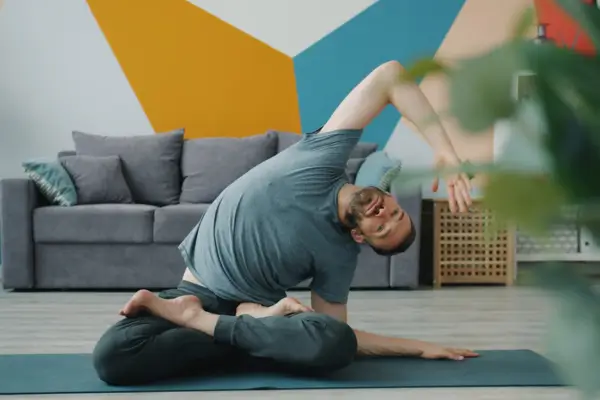
Mental fitness can be promoted by engaging the brain and the body in mutual collaboration as opposed to separation. Practices such as mind-body therapies rely on concentration, movement, and controlling the breath, aspects of mental fitness. According to neuroscientific research, such practices stimulate the prefrontal area, the center through which an individual can concentrate and make rational thoughts.
Unlike physical relaxation, however, active mental work characterizes mind-body exercises. Patterns of movement, synchronized breathing, and postures are quite challenging for coordinating and concentrating simultaneously. The repeated demands over weeks of mental work develop mental endurability and help in improving personal regulation in daily life.
Meditation and Focus Training
Focused meditation helps develop brains to become aware of unwanted distractions without focusing on them. Simple exercises through mindfulness improve and increase sustained concentrations, and certain studies, which have identified meditation techniques consisting of Google and Harvard, have consistently pointed out its effects on improving working memory.
Meditation specific to focused attention, staying with breath or sound, is most effective for mental disciplines. Eventually, this practice sharpens response speed, resulting in fewer impulses in work or personal situations.
Technology Supporting Mental Fitness
Today, games have moved beyond mere puzzles to sophisticated tools that adjust their difficulty levels. Modern brain-training tools allow individuals to experience personalized difficulty levels. This optimizes the challenge levels that individuals face, which is critical for brain plasticity.
Technology also helps achieve uniformity. Short sessions during the day, reminders, and tracking are all conducive for practice. Studies say practice is more significant than length of sessions.
Sleep, Recovery, and Long-Term Brain Health
Studies from the World Health Organization and similar organizations highlight the number of small habits practiced over a period tend to build brain resiliency more than short-term interventions. Well rested, quality sleep bolsters connections made during waking. Another aspect, which is of great importance, is controlling stress and interaction.
Brain Training Myths Versus Facts
Mental fitness is an increasingly popular term, and everybody likes it. However, the truth of the matter remains that not all trends are correct. There are no mental fitness quick fixes.
According to modern neuroscience, it is very true that it is possible to develop, change, and improve one’s brain as one ages, as long as one appropriately challenges his or her brain.
Building a Personalized Mental Fitness Plan
A mentally fit plan begins with the understanding that everyone has their own set of personal objectives to attain. Personalization allows the effort to be directed at the most relevant brain functions as opposed to following a routine that applies to everyone. Such an approach strikes an appropriate balance between challenge and rest.
Being able to track focus, memory, and emotional events allows us to determine where the basic training needs to take place. Targeted interventions, such as attention training, skill development, or stress reduction, can then be added to an activity schedule to make progress sustainable.
Mental fitness pairs naturally with the emotional side of wellbeing. See Self-Compassion Habits for how managing your inner critic supports cognitive performance.
Conclusion
Mental fitness is not a thing done, but a thing developed, and this is built through science, consistency, and balance. The brain, like muscles, needs to be exercised regularly, and rest needs to be factored in along with regular good lifestyle habits. Rather than adopting a harmful search for instant solutions, the emphasis on gradual improvement develops a brain capable of flexibility, durability, and functionality at all ages.